Meningococcal Meningitis

What is Meningococcal Meningitis?

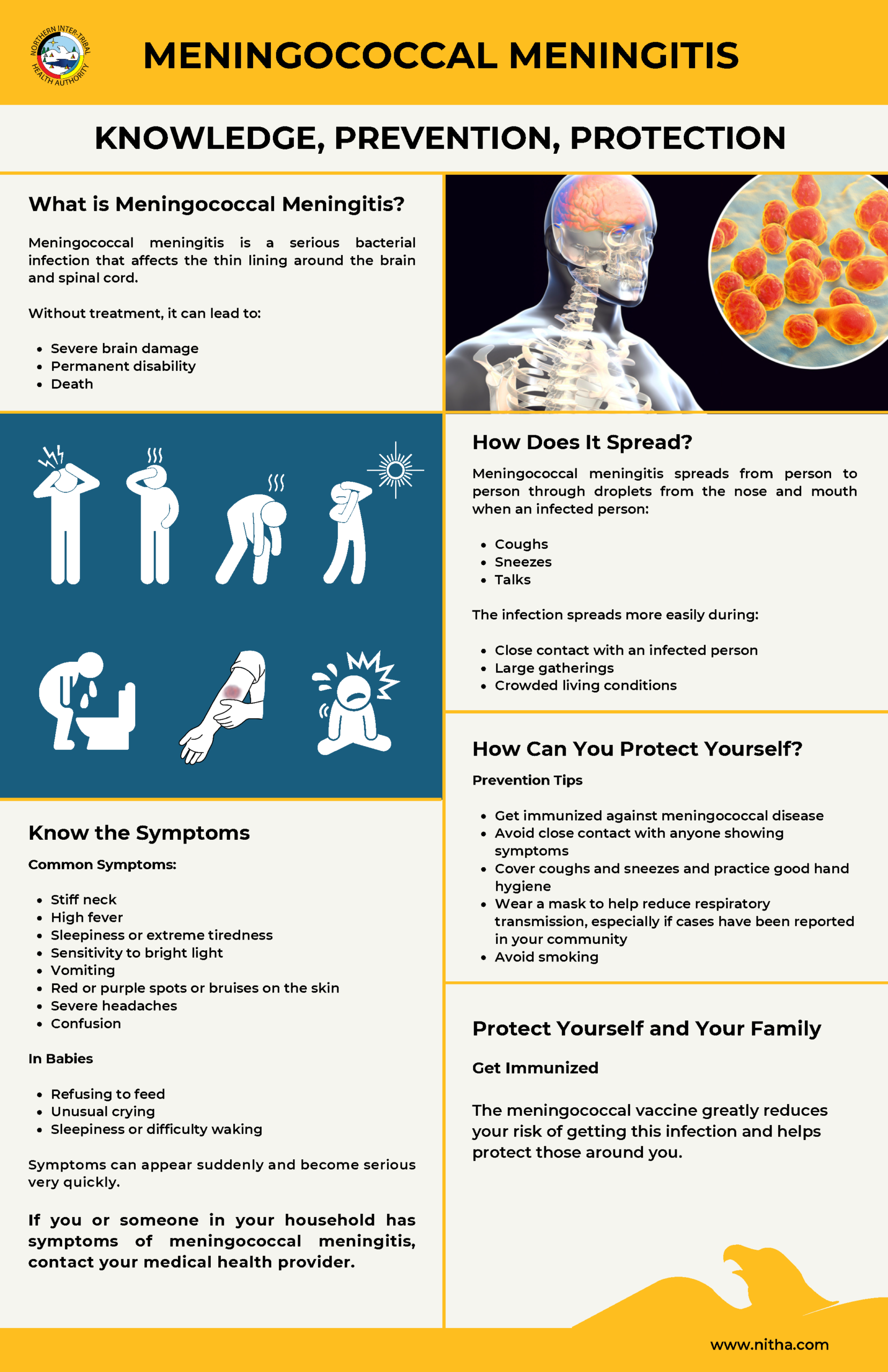
Meningococcal meningitis is a serious bacterial infection caused by Neisseria meningitidis. It affects the protective lining (meninges) surrounding the brain and spinal cord. The infection can become life-threatening within hours and may cause severe complications such as brain damage, hearing loss, disability, or death if not treated quickly.
How does it spread?

Meningococcal bacteria spread from person to person through respiratory and throat secretions.

You can become infected through:

  • Close or prolonged contact with an infected person
  • Coughing or sneezing
  • Kissing
  • Sharing drinks, utensils, cigarettes, or vaping devices
  • Living in the same household or crowded settings

Signs and Symptoms

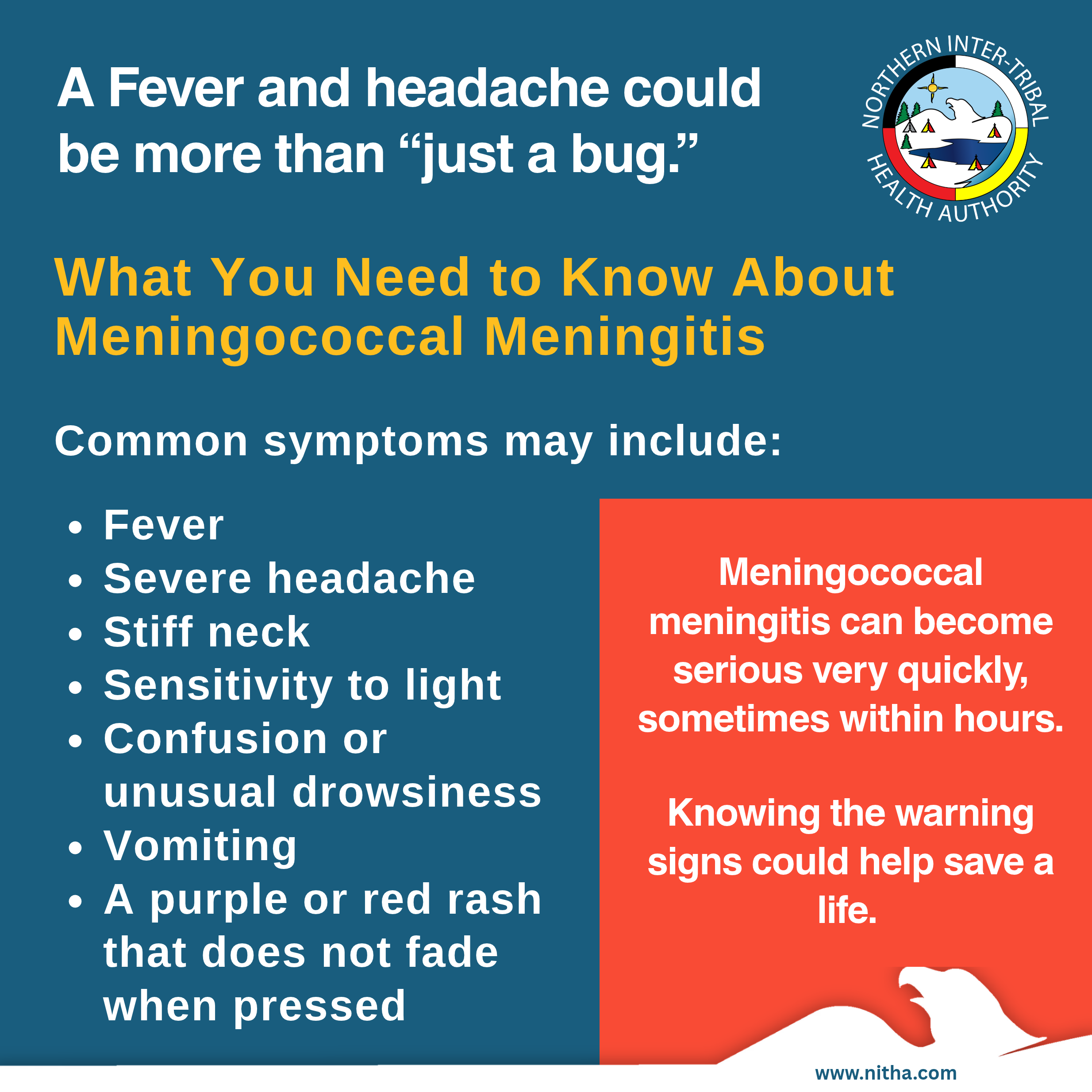
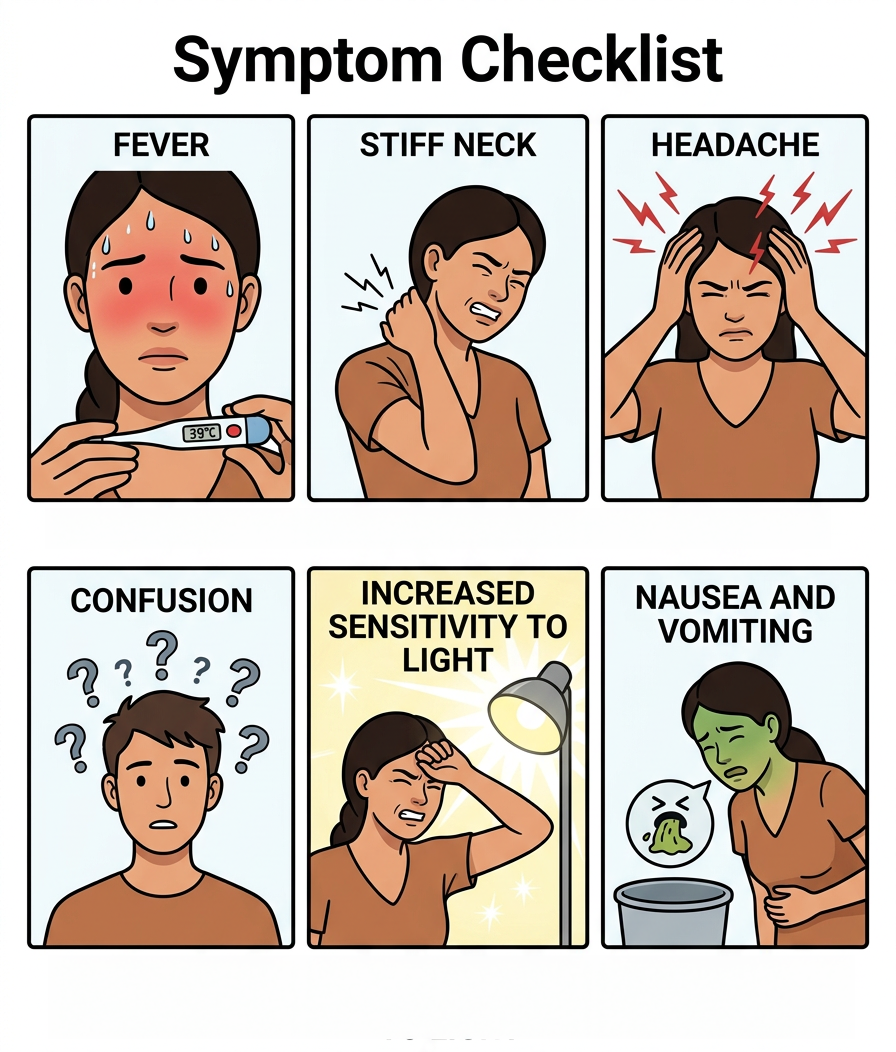
Symptoms may appear suddenly and worsen very quickly.


Common Symptoms

  • Fever
  • Severe headache
  • Stiff neck
  • Nausea or vomiting
  • Sensitivity to light (photophobia)
  • Sleepiness or difficulty waking up
  • Confusion
  • Red or purple rash or bruising on the skin

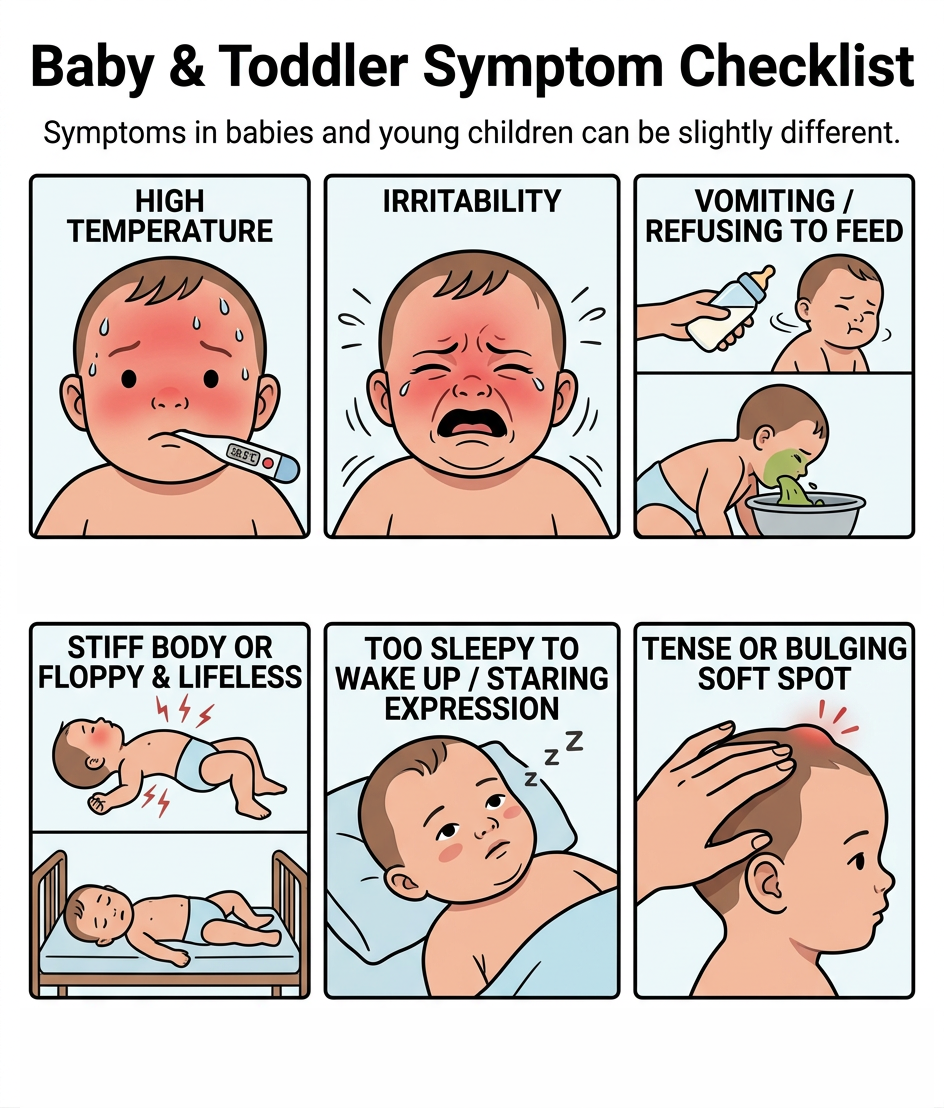
Symptoms in Babies

Babies may not show the classic symptoms. Watch for:

  • Refusing to feed
  • Unusual or high-pitched crying
  • Irritability
  • Vomiting
  • Being unusually sleepy or inactive
  • A bulging soft spot on the head (fontanelle)

Who is Most at Risk?

Anyone can get meningococcal disease, but the risk is higher for:

  • Infants and young children
  • Teenagers and young adults
  • People living in crowded conditions
  • Household contacts of an infected person
  • People with certain medical conditions that affect the immune system
  • Smokers and those exposed to second-hand smoke

Prevention

The best protection against meningococcal disease is vaccination. Vaccines provide long-lasting protection against the most common strains that cause meningococcal disease.

You can also reduce your risk by:

  • Getting immunized
  • Avoiding close contact with people who are sick
  • Covering coughs and sneezes
  • Washing your hands regularly
  • Not sharing drinks, utensils, cigarettes, or vaping devices
  • Avoiding smoking and exposure to second-hand smoke

Saskatchewan is seeing higher-than-usual activity of meningococcal disease.

Is Your Baby Eligible? Your child may be eligible if they are:

  • 6 weeks to 11 months old
  • Live in, travel to, or receive visitors from a First Nations community in Saskatchewan or Manitoba

Let your Public Health Nurse know if your child meets these criteria.

Why Is This Important? Meningococcal disease can cause serious illness in babies and young children. Vaccination helps provide earlier protection during this period of increased disease activity. Learn More: Contact your local Health Centre, Public Health Nurse, or healthcare provider for more information. Vaccination helps protect your baby from serious illness.

When to Seek Medical Attention

Act Fast. Early Treatment Saves Lives.

Seek medical attention immediately if you or someone in your household develops:

  • Fever with a severe headache
  • Stiff neck
  • Confusion
  • Sensitivity to light
  • Vomiting
  • A red or purple rash
  • Symptoms that worsen rapidly

Visit your local health centre, nursing station, or nearest clinic right away.

Resources:

Knowledge, Prevention, Protection

Protect Your Baby from Meningococcal Meningitis

FAQ – Invasive Meningococcal Disease (IMD)